
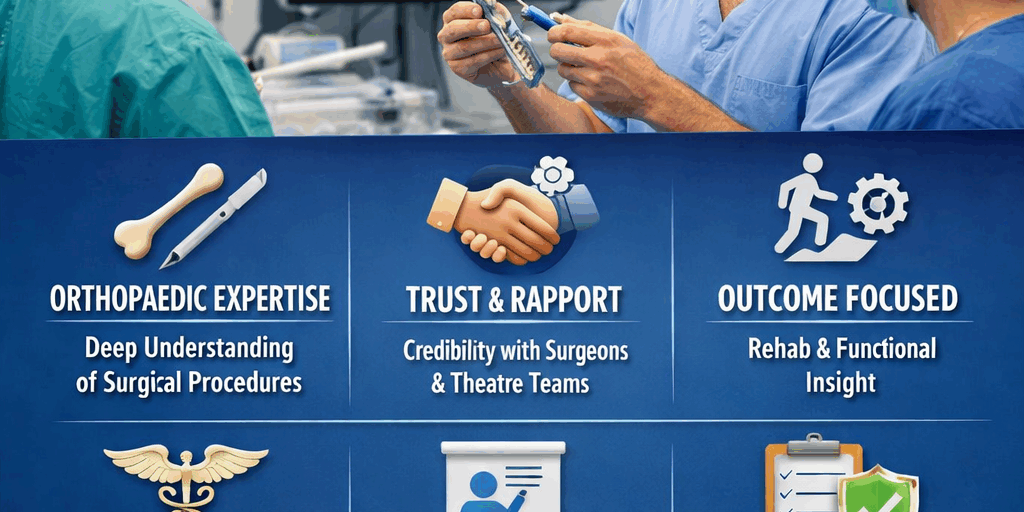
Hospital-based physiotherapists possess a unique combination of clinical expertise, systems awareness, and interdisciplinary experience that positions them exceptionally well for orthopaedic Clinical Support Specialist (CSS) roles. Their day-to-day exposure to complex musculoskeletal conditions, surgical pathways, and multidisciplinary teams equips them with practical insights that directly translate into high-value support for orthopaedic surgeons, operating theatre staff, and medical device organisations.
- Deep Understanding of Orthopaedic Pathology and Surgical Pathways
Physiotherapists working in hospital settings manage patients across the full continuum of orthopaedic care—from acute trauma and post-operative rehabilitation to chronic degenerative conditions. This exposure provides:
- A strong grasp of anatomy, biomechanics, and pathology relevant to orthopaedic implants and procedures
- First-hand understanding of surgical indications, contraindications, and expected outcomes
- Insight into how surgical decisions affect rehabilitation, functional recovery, and patient satisfaction
As a result, hospital-based physios can discuss procedures and products with surgeons in a clinically meaningful and outcome-focused manner.
- Credibility and Rapport with Surgeons and Theatre Teams
Hospital physiotherapists routinely collaborate with orthopaedic surgeons, registrars, nurses, and allied health professionals. This fosters:
- Confidence communicating with senior clinicians in high-pressure environments
- An appreciation of operating theatre workflows, sterile technique, and intraoperative priorities
- Professional credibility rooted in shared clinical language and patient-centred objectives
In a CSS role, this credibility allows physios to integrate seamlessly into theatre environments, provide trusted technical support, and build long-term professional relationships.
- Strong Functional and Outcome-Driven Perspective
Unlike roles focused solely on procedural success, physiotherapists are trained to evaluate outcomes in terms of mobility, function, pain reduction, and return to activity. This perspective is highly valuable in orthopaedics, where implant choice and surgical technique directly influence rehabilitation trajectories.
Hospital-based physios can therefore:
- Articulate how implant design impacts biomechanics and post-operative function
- Support surgeons in aligning procedural decisions with optimal patient outcomes
- Contribute meaningfully to discussions around evidence-based practice and value-based care
- Experience with Complex Cases and Problem-Solving
Acute hospital environments expose physiotherapists to complex, high-risk, and non-standard cases, including revision surgeries, multi-trauma patients, and medically complex individuals. This builds:
- Advanced clinical reasoning and adaptability
- Calm, structured problem-solving under pressure
- The ability to anticipate complications and troubleshoot in real time
These attributes are critical for orthopaedic CSS roles, particularly when supporting new technologies, complex procedures, or revision cases in theatre.
- Education and Communication Expertise
Education is a core competency of physiotherapy practice. Hospital physios routinely educate patients, junior staff, and multidisciplinary colleagues. This translates well to the CSS role, which often requires:
- Delivering in-service training to surgeons, registrars, and theatre staff
- Explaining technical concepts clearly and concisely
- Tailoring communication to different levels of clinical experience
Their ability to bridge clinical concepts with practical application makes hospital-based physiotherapists highly effective educators and product specialists.
- Systems Awareness and Compliance Mindset
Working within public and private hospital systems gives physiotherapists a strong appreciation of governance, documentation, infection control, and regulatory compliance. This aligns closely with the responsibilities of a CSS, including:
- Adhering to hospital policies and operating theatre protocols
- Understanding risk management and patient safety priorities
- Supporting ethical, compliant use of medical devices
This systems literacy reduces onboarding time and lowers risk for employers and clinical partners.
Conclusion
Hospital-based physiotherapists bring a rare and powerful blend of clinical depth, functional insight, communication skill, and systems awareness to orthopaedic Clinical Support Specialist roles. Their close alignment with surgeons, understanding of patient outcomes, and comfort in high-stakes clinical environments make them not just suitable—but highly effective—in supporting orthopaedic procedures and technologies.
For medical device companies and orthopaedic teams alike, hospital-based physios represent a clinically credible, outcome-focused, and strategically valuable addition to the orthopaedic support landscape.